
Protecting Mangroves with Geotextile Tubes: A Smart and Sustainable Coastal Solution
Today, I want to introduce a practical and environmentally friendly solution that is gaining global attention: using geotextile tubes to protect and restore mangrove ecosystems. This approach combines coastal engineering with nature-based solutions, offering long-term protection without damaging the fragile environment.
Key Takeaways
Here’s a quick overview of why geotextile tubes are an effective solution for mangrove protection:
- What Are Geotextile Tubes?
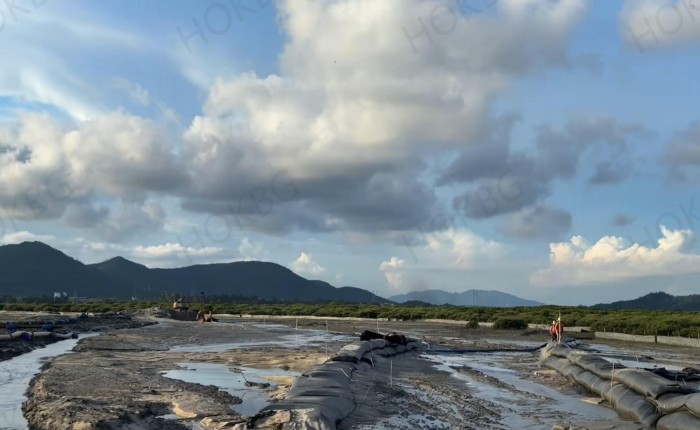
Geotextile tubes are large, engineered fabric containers made from high-strength, permeable geotextile. When filled with sand or dredged material, they form stable, flexible structures that can be used for coastal protection and erosion control.
- Why Mangroves Need Protection
Mangroves are highly sensitive to changes in sediment movement, wave energy, and water flow. Excessive erosion or strong currents can wash away young mangrove roots before they become established.
- How Geotextile Tubes Help
Placed strategically offshore or along the shoreline, geotextile tubes reduce wave energy, stabilize sediments, and create calm conditions that allow mangroves to grow naturally.
- Environmental Benefits
This solution works with nature rather than against it. The tubes can be buried, covered with sediment, and integrated into the landscape, minimizing visual impact and ecological disturbance.
Understanding the Role of Mangroves in Coastal Protection
Mangroves act as natural coastal defenses. Their dense root systems trap sediments, reduce wave height, and protect inland areas from storm surges and flooding. In many tropical and subtropical regions, healthy mangrove forests are the first line of defense against coastal erosion.
However, when waves become too strong or sediment balance is disrupted by dredging and construction, mangroves struggle to survive. Young seedlings are especially vulnerable during the early growth stages.
This is where engineered coastal support, such as geotextile tubes, can make a critical difference.
What Are Geotextile Tubes and How Do They Work?
Geotextile tubes—sometimes called geobags or geotextile containers—are fabricated from durable woven geotextile fabrics. These fabrics are designed to:
Allow water to pass through freely
Retain sand and fine particles
Withstand UV exposure, saltwater, and wave forces
Installation Process
Placement
The empty geotextile tubes are positioned offshore, parallel to the coastline or in front of existing mangrove belts.
Filling
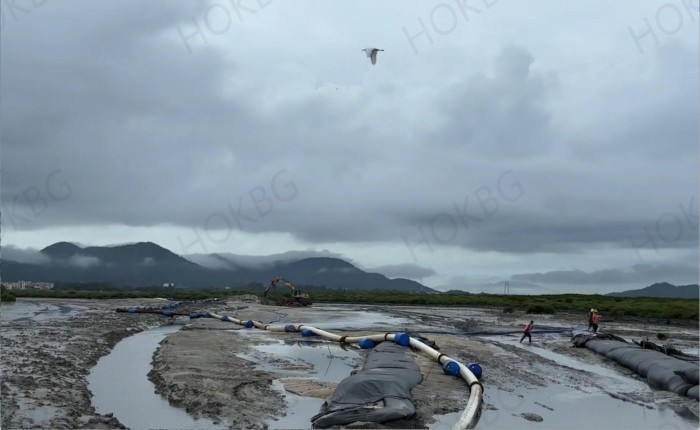
Tubes are hydraulically filled with sand or locally available dredged material.
Dewatering and Stabilization
Water drains out through the fabric, leaving behind a dense, stable sand-filled structure.
Once installed, these tubes act as submerged or semi-submerged breakwaters, reducing incoming wave energy before it reaches the mangroves.
How Geotextile Tubes Protect Mangroves
- Wave Energy Reduction
- By absorbing and dissipating wave energy, geotextile tubes create a calmer nearshore environment. This significantly reduces erosion around mangrove roots and seedlings.
- Sediment Retention
- Mangroves depend on stable sediment conditions. Geotextile tubes help trap suspended sediments, encouraging natural accretion rather than erosion.
- Improved Survival Rate for Mangrove Seedlings
- In restoration projects, mangrove seedlings planted behind geotextile tubes show much higher survival rates due to reduced hydrodynamic stress.
- Flexible and Adaptable Design
- Unlike rigid concrete structures, geotextile tubes can adapt to minor seabed settlement and changing coastal conditions without cracking or failing.
Environmental and Economic Advantages
Eco-Friendly by Design
No hard concrete structures
Minimal disturbance to marine life
Can be buried and naturally integrated over time
Cost-Effective Solution
Lower material and installation costs compared to rock or concrete breakwaters
Uses locally available fill materials
Faster installation with minimal heavy equipment
Long-Term Sustainability
Geotextile tubes support nature-based coastal protection, allowing mangroves to eventually take over the primary protective role as they mature.
Typical Applications in Mangrove Projects
Geotextile tubes are widely used in:
Mangrove restoration and rehabilitation projects
Coastal erosion control near sensitive ecosystems
Shoreline stabilization in estuaries and tidal flats
Protection of newly planted mangrove belts
Once mangroves are fully established, the tubes often become buried under natural sediment, leaving behind a self-sustaining ecosystem.
Conclusion
Protecting mangroves is not just an environmental responsibility—it is a smart investment in coastal resilience. Geotextile tubes provide an effective, flexible, and environmentally responsible solution that bridges the gap between engineering and ecology.
By reducing wave energy, stabilizing sediments, and creating favorable growth conditions, geotextile tubes help mangroves thrive and continue their vital role in protecting our coastlines.
If you are looking for a proven solution for mangrove protection or coastal restoration, geotextile tubes are a technology well worth considering.
