
Constructing new marine settlements
Home / Seaweed Containment System Using Silt Curtain
Project Background
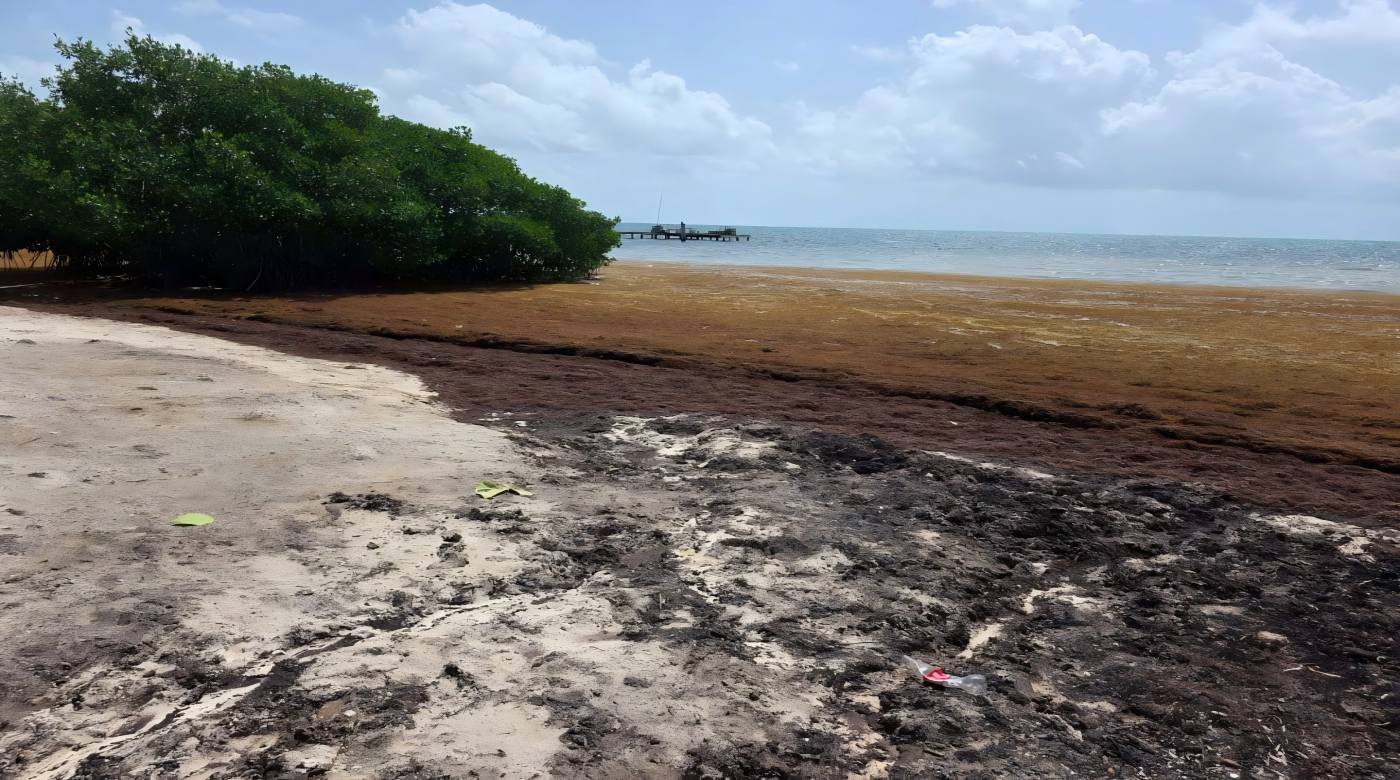
Large-scale seaweed accumulation has become an increasing challenge in many coastal areas, affecting marine environments, coastal landscapes, aquaculture operations, tourism facilities, and shoreline management.
Driven by ocean currents, tides, winds, and seasonal changes, floating seaweed can rapidly spread over large areas, making collection and disposal difficult. Uncontrolled seaweed accumulation may cause unpleasant odors, reduce water quality, obstruct navigation channels, and impact coastal activities.
An effective containment system is required to limit seaweed movement, concentrate floating biomass within designated areas, and create favorable conditions for efficient collection and management.
HOKBG Seaweed Containment Solution
HOKBG provides a specialized Seaweed Containment System based on high-performance silt curtain technology.
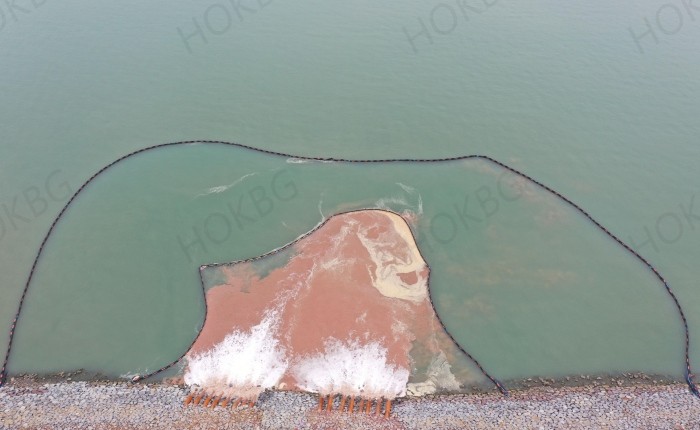
The system uses a high-strength integrated silt curtain to create a controlled containment zone, limiting the movement and spreading of floating seaweed caused by waves, currents, and wind.
Unlike conventional segmented curtain systems, HOKBG adopts a one-piece integrated curtain structure, where the curtain strength is equal to the strength of the base fabric. This eliminates weak points caused by fabric joints and improves overall durability under marine conditions.
The system is designed to support efficient seaweed management by concentrating biomass in designated areas, allowing easier collection, transportation, and disposal.
Working Principle
The HOKBG Seaweed Containment System operates through three main functions:
Containment:
The floating curtain forms a physical barrier that restricts horizontal movement of floating seaweed.
Concentration:
Seaweed is retained within a controlled zone, allowing accumulation and reducing the affected area.
Collection Assistance:
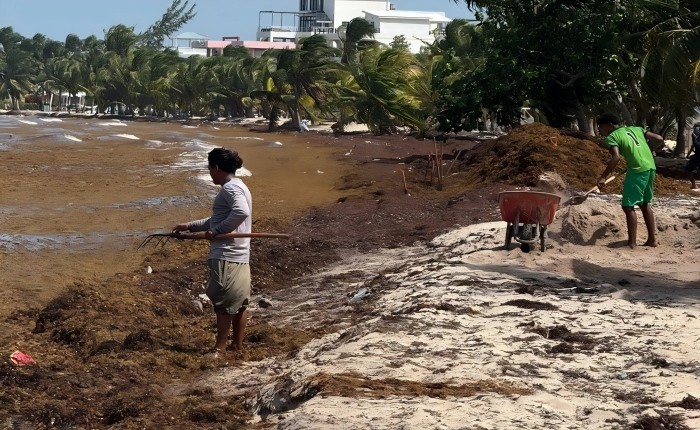
The concentrated biomass can be removed using boats, mechanical equipment, or manual collection methods.Installation Methodology
STEP 01
Site Investigation:
Before installation, water depth, current velocity, tidal range, wave conditions, and seaweed movement patterns are evaluated.STEP 02
Layout Design:
The containment area is designed according to seaweed distribution, current direction, coastal conditions, and cleaning requirements.STEP 03
Curtain Deployment:
The integrated silt curtain is deployed from boats and positioned according to the designed layout.Sandbag ballast is installed along the bottom edge to maintain curtain stability and ensure effective underwater containment.
STEP 04
Seaweed Collection:
After containment, collected seaweed can be removed through mechanical harvesting, vessel-based collection, or manual operations.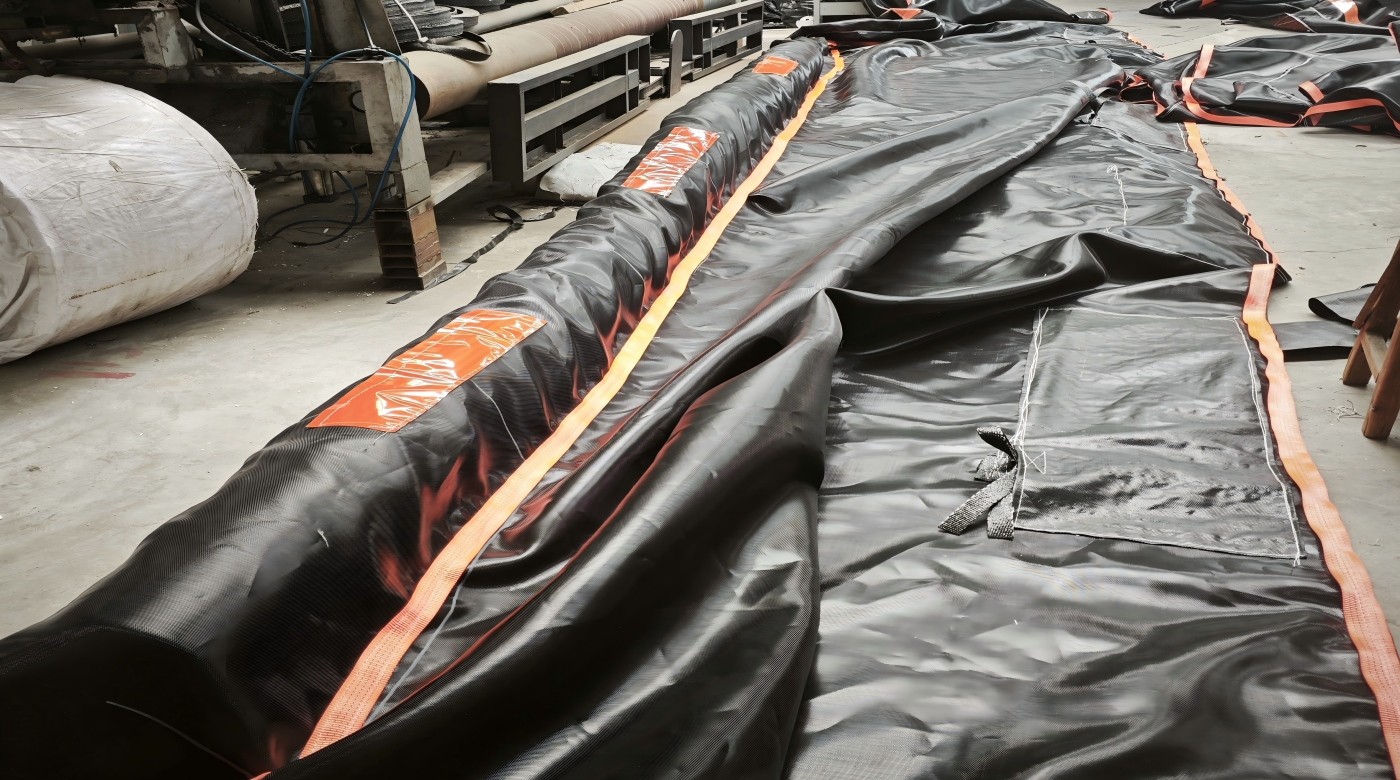
Performance Benefits
- One-piece integrated curtain structure
- Curtain strength equal to base fabric strength
- No weak points caused by vertical seams
- Sandbag ballast system without steel chain corrosion
- Sediment interception efficiency above 90%
- UV resistance up to 3 years in seawater
- Effective control of floating seaweed spreading
- Improves collection and maintenance efficiency
Typical Applications
- Floating Seaweed Control Areas
- Coastal Seaweed Management
- Resort Beach Maintenance
- Harbor Water Surface Management
- Aquaculture Area Protection
- Marine Environmental Management
- Seasonal Seaweed Bloom Control
| Parameter | Specification |
Product | HOKBG Seaweed Containment Silt Curtain |
Curtain Structure | One-Piece Integrated Curtain |
Curtain Strength | Equal to Base Fabric Strength |
Sediment Containment Efficiency | ≥90% |
Ballast System | Sandbag Ballast |
UV Resistance | Up to 3 Years in Seawater |
Fabric Type | High-Strength UV-Resistant Marine Fabric |
| Installation Method | Floating Marine Installation |
| Main Function | Seaweed Containment and Control |
| Applications | Seaweed Bloom Control, Coastal Management, Marine Environmental Control |
Silt Curtains: Environmental Compliance & Efficiency Challenges
Pain Point 01
Poor Design Leads To Low Pollution Control, Risk Of Penalties
Customer Concern:
Conventional silt curtains use mixed fabrics sewn together, with overall strength <50% of base material. They fail under wave impact, leading to breakage, excessive turbidity, fishery disputes, fines and suspension risks. Sediment interception is often <60%.
Solution:
Useing high-strength permeable fabric in an integrated structure. Curtain strength = 100% of base fabric. With sandbag ballast (non-corrosive), sediment interception reaches >90%, while dissipating wave energy and ensuring compliance (permeability coefficient 1.5×10⁻³ m/s).Pain Point 02
Poor Durability, Frequent Replacements
Customer Concern:
Standard silt curtains lack UV resistance and seawater durability, lasting less than 1 year. This requires annual replacement, raising offshore operation costs and delaying schedules.
Solution:
Use anti-aging integrated silt curtains, durable for 3 years in seawater, cutting life-cycle cost by 50%.Constructing new marine settlements
Contact Person