
Why Do Luxury Beach Resorts Build Artificial Beaches?
Why Do Luxury Beach Resorts Build Artificial Beaches?
Artificial Beach Construction: More Than Just Beautiful Sand
When people think about luxury beach resorts, they imagine crystal-clear water, white sandy beaches, and palm trees. However, many of the world's most famous resort beaches were not naturally formed—they were carefully engineered.
From the Maldives and Dubai to Saudi Arabia and the Philippines, artificial beach construction has become a standard solution for creating attractive coastlines while protecting valuable coastal assets.
Today, artificial beaches are not simply designed for aesthetics. They improve coastal resilience, increase property value, protect infrastructure, and enhance the guest experience.
Why Natural Beaches Are Disappearing
Many resort developers discover that their coastlines cannot naturally support wide sandy beaches.
Common challenges include:
· Coastal erosion caused by waves and tides
· Seasonal sand loss during storms
· Rising sea levels
· Strong longshore currents transporting sand away
· Rocky or muddy shorelines unsuitable for tourism
Without proper coastal engineering, newly placed sand can disappear within months, resulting in repeated maintenance costs.
This is why many governments and resort developers choose beach nourishment instead of relying on natural sediment processes alone.
What Is Artificial Beach Construction?
Artificial beach construction is the process of creating or restoring a sandy shoreline by importing sand and stabilizing it using coastal engineering techniques.
Unlike traditional hard engineering, modern beach nourishment aims to work with natural coastal processes rather than against them.
Typical components include:
· Beach nourishment
· Sand retention systems
· Offshore wave attenuation
· Shoreline stabilization
· Coastal habitat restoration
The goal is to create a beach that remains stable while maintaining a natural appearance.
Why Luxury Resorts Invest in Artificial Beaches
1. Increase Property Value
A beachfront hotel with a wide sandy beach attracts significantly more visitors than one with a narrow or rocky shoreline.
Studies in coastal tourism consistently show that beach quality strongly influences room rates and occupancy.
2. Improve Guest Experience
Guests expect calm water and soft sand.
Artificial beaches create:
· Safe swimming areas
· Comfortable recreational space
· Better landscape aesthetics
· Improved photography and social media appeal
3. Reduce Future Maintenance Costs
Without shoreline stabilization, resort owners often need to replenish sand after every storm season.
A properly designed artificial beach significantly reduces long-term maintenance.
4. Protect Coastal Infrastructure
Wide beaches absorb wave energy before it reaches hotels, villas, restaurants, and recreational facilities.
This reduces erosion around valuable assets.
Why Geotextile Tubes Have Become Popular
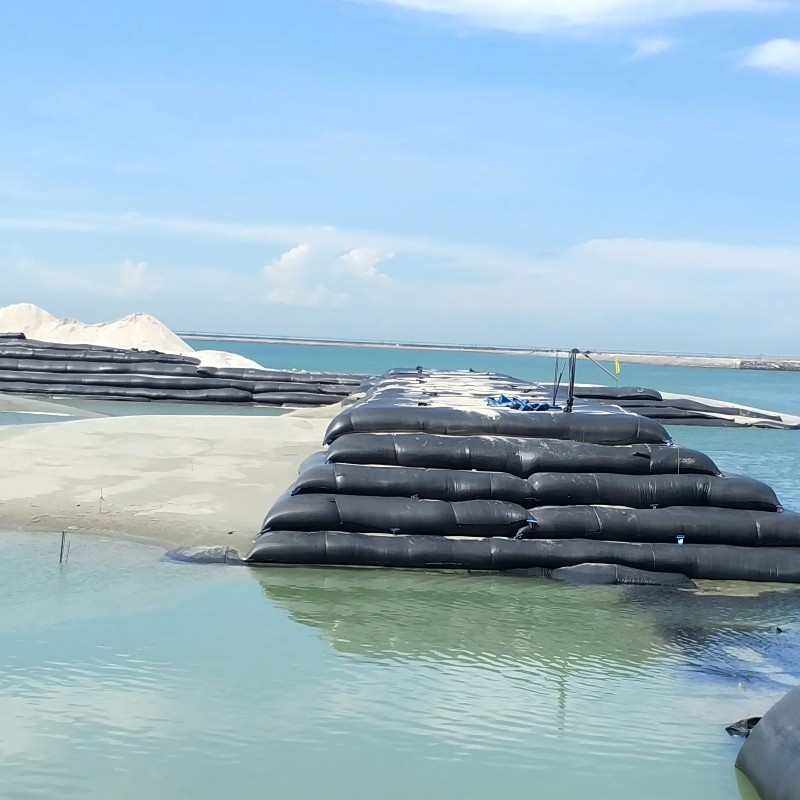
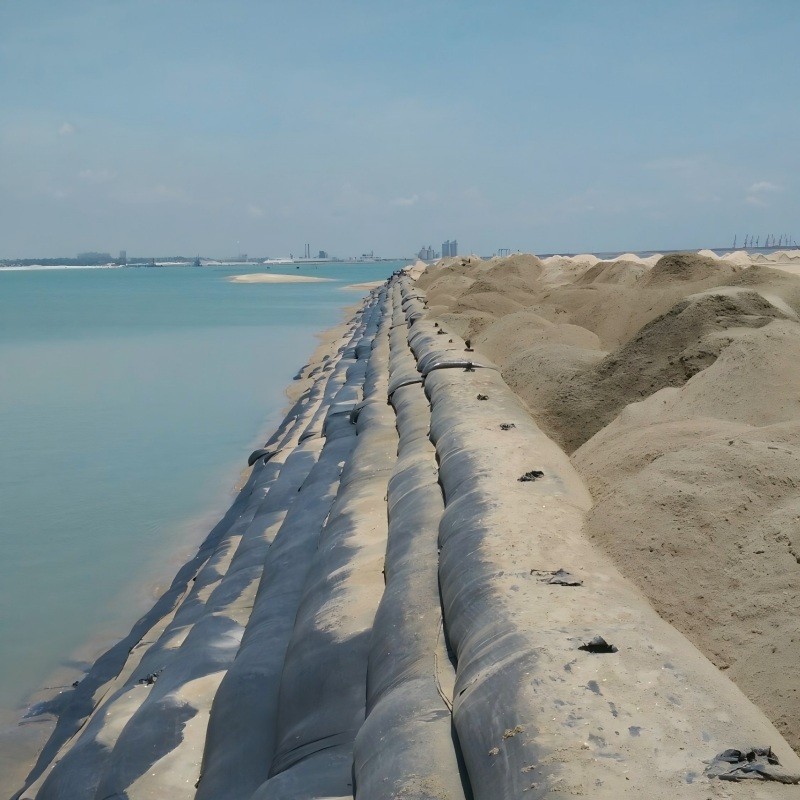
Modern beach nourishment projects increasingly use geotextile tubes as submerged coastal structures.
Unlike traditional rock breakwaters, geotextile tubes:
· Reduce wave energy
· Retain nourished sand
· Blend naturally into the environment
· Require less heavy construction equipment
· Offer lower installation costs
Because the tubes are usually buried beneath the sand or submerged offshore, visitors rarely notice the engineering behind the beach.
A Sustainable Coastal Solution
Many countries are moving away from large concrete seawalls.
Instead, engineers prefer nature-based coastal protection that allows beaches to evolve naturally while remaining stable.
Geotextile tubes support this concept by providing flexible coastal protection without significantly altering the landscape.
Typical Applications
Artificial beaches are widely used for:
· Luxury beach resorts
· Private islands
· Hotel developments
· Coastal residential communities
· Waterfront tourism projects
· Island restoration
Conclusion
Artificial beach construction is no longer only about creating beautiful coastlines.
It is about protecting investments, improving tourism experiences, and building resilient coastal infrastructure.
Combined with beach nourishment, geotextile tubes provide an effective and environmentally responsible solution for modern resort developments.
